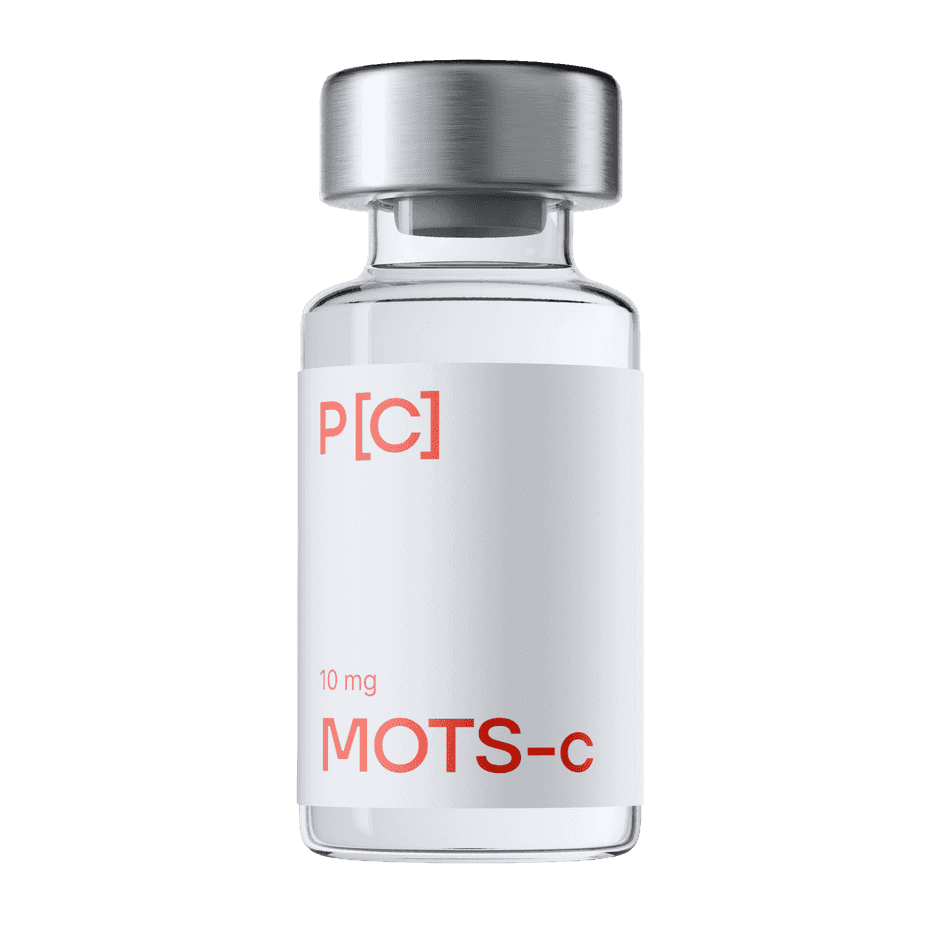
MOTS-c · 10mg
Product Usage: The products we offer are intended for in-vitro laboratory research use only. The products are not for human or animal use or consumption of any kind. The products offered on this website are not intended to diagnose, cure, mitigate, treat or prevent disease. In purchasing any of these items, the customer acknowledges that there are risks involved with consumption or distribution of these products.
99.1%+ purity certificate
Show scientific data
How MOTS-c works
In preclinical models, MOTS-c is described as a mitochondria-encoded peptide that targets metabolic stress networks in tissues such as skeletal muscle. Reported mechanisms include modulation of folate and purine metabolism leading to AICAR accumulation and AMPK activation, plus stress-triggered nuclear translocation with downstream changes in nuclear gene-expression programs.
Areas of research
Area & performance
Description
Metabolic flexibility and insulin sensitivity
9/10
How cells handle glucose and fat storage under metabolic stress. In mouse and cellular models, MOTS-c modulates one-carbon folate and de novo purine pathways, increasing AICAR and activating AMPK, with downstream insulin-sensitivity and obesity-resistance readouts.
Exercise signaling and physical capacity biology
8/10
How endurance-like adaptations appear in muscle during stress and training. In mice, MOTS-c administration improved physical performance across ages; in humans, exercise increases endogenous MOTS-c in muscle and circulation in observational and experimental settings.
Mitochondria-to-nucleus stress communication
8/10
How mitochondria-encoded peptides influence nuclear programs. Under metabolic stress, MOTS-c has been reported to translocate to the nucleus and shift nuclear gene-expression patterns in an AMPK-dependent manner in preclinical systems.
Aging biomarkers and “mitokine” research
7/10
How circulating and tissue levels change with age and metabolic status. Multiple human and animal studies report age-associated shifts in MOTS-c measures, motivating research into stress resilience, metabolic risk phenotypes, and longevity-linked mtDNA variants.
Resources & citations
#
Links
About peptides



Dr. Travis Hudon
MS
“BPC 157 shows promise in accelerating healing from injuries.”
We protect your purchases
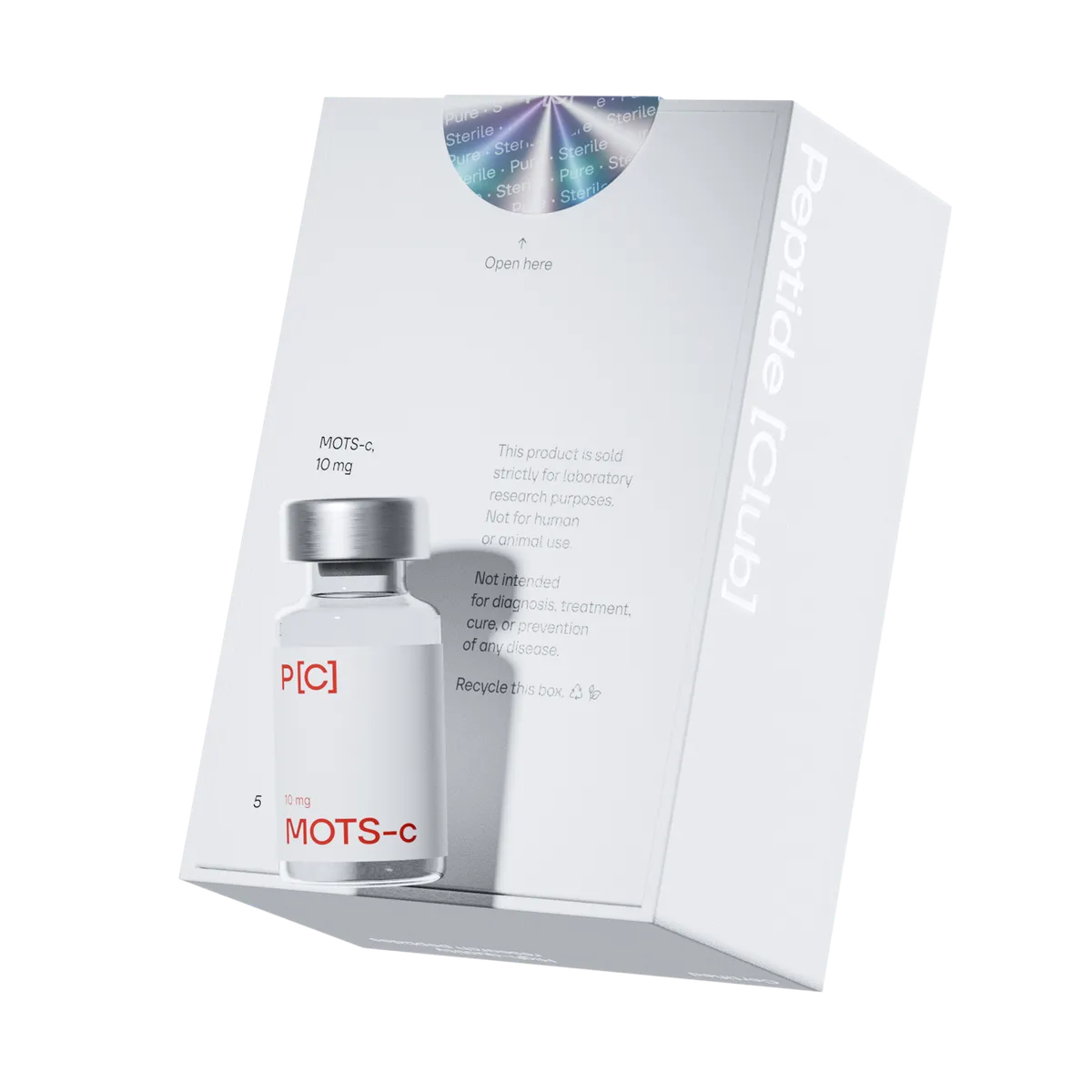

01
Safety seal
We make sure you are the first person to open the compound after its production. The seal means the compound is genuine, tested, and sterile.
02
Rigid packaging
Compounds of other peptide companies are delivered without boxes. Best case: a bubble wrap. We developed a box that keeps the vial protected at all times.
03
Batch number
The batch number is always accessible on the packaging and the vial. You can always cross-reference it with the data base of COAs on our website for the assurance.
01
Safety seal
We make sure you are the first person to open the compound after its production. The seal means the compound is genuine, tested, and sterile.
02
Rigid packaging
Compounds of other peptide companies are delivered without boxes. Best case: a bubble wrap. We developed a box that keeps the vial protected at all times.
03
Batch number
The batch number is always accessible on the packaging and the vial. You can always cross-reference it with the data base of COAs on our website for the assurance.
Get all the benefits
2-day EU delivery
ISO standard compliance
Verified >99% purity for every peptide
Proper -50°C warehouse & courier storage
Sterile production and packaging
Protective packaging
EU stores
Overseas suppliers